How it started: the 1988 Kawarau Bridge jump
AJ Hackett and Henry van Asch opened the world's first permanent commercial bungy jumping operation at the Kawarau Gorge Suspension Bridge in 1988, a 43-metre jump over the Kawarau River. Hackett had already made bungy jumps off structures like the Eiffel Tower to draw attention to the sport, but the Kawarau Bridge site is where it became a standing, bookable business rather than a stunt — and it's still operating at the same bridge today, making it the longest continuously running commercial bungy site in the world.
That single business decision is why Queenstown, a town of roughly 15,000 permanent residents, now supports dozens of adventure-tourism operators. Jet boating, skydiving and skiing were all established activities elsewhere before this, but Queenstown's cluster of gorges, lakes and mountains within a 45-minute radius of town made it uniquely suited to stacking several of them into one trip.
Bungy jumping
Beyond the original Kawarau Bridge site, Queenstown now has three commercial bungy sites at different heights and styles: the Kawarau Bridge (43m, the classic), the Ledge Bungy (47m, launched from a platform above town with a view over Queenstown itself), and the Nevis Bungy (134m, New Zealand's highest, jumped from a purpose-built pod suspended over the Nevis River canyon). Each is a separate booking and price point — the Nevis is the most expensive and requires a longer transport transfer into the canyon.
What to actually expect
Check-in typically happens 30-45 minutes before your jump window, including a weigh-in (harness sizing is weight-based) and a safety briefing. There's no minimum age but there is a minimum weight (usually around 35kg) and a maximum weight (around 130-150kg depending on the site) — check the specific operator's current limits before booking, since they vary slightly by site and can change.
Jet boating
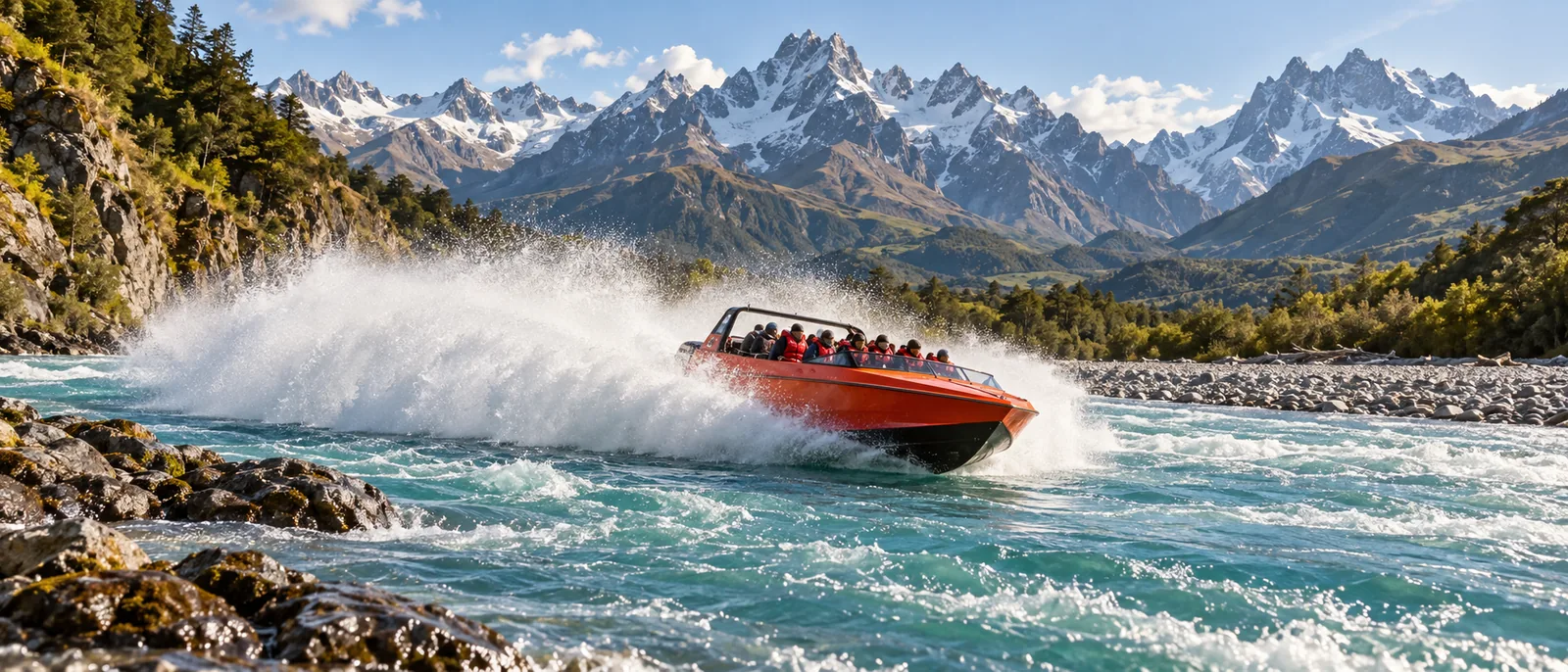
The Shotover Jet operates inside the Shotover River's canyon walls, in places barely wider than the boat itself, using a shallow-draft design (able to run in as little as 10cm of water) that lets it navigate rock-lined bends most boats couldn't touch. The Dart River Jet Safari, based near Glenorchy, runs a longer, more scenic route through braided river channels and beech forest rather than tight canyon walls — genuinely a different experience from the Shotover, not just a rebrand of the same ride.
Weather and water-level sensitivity
Both operations can be affected by water levels: too low and certain channels become unrunnable, too high (after heavy rain) and trips can be paused for safety. Operators typically call this on the day rather than in advance, so build a little schedule slack around a jet-boat booking rather than treating it as fixed to the minute.
Skydiving
Queenstown skydiving operators jump from altitudes up to roughly 15,000-19,000 feet depending on the package, giving 60-90 seconds of freefall before the parachute opens, with views over Lake Wakatipu, The Remarkables and — on a clear day — as far as Milford Sound. The total time commitment, including check-in, gearing up, the flight up and the descent, typically runs 2.5-3.5 hours even though the jump itself is brief — don't book it as a quick add-on between other activities.
The one thing that catches people out
Skydiving is one of the most weather-dependent activities on this list — cloud cover over the drop zone, not just rain, can cancel or delay a jump, since the operator needs clear visibility for the descent. If your schedule is tight, book skydiving earlier in your trip rather than on the last possible day, so a weather cancellation leaves you room to rebook.
Skiing and snowboarding
The Remarkables and Coronet Peak are Queenstown's two closest ski fields, both roughly 20-30 minutes from town, with Cardrona and Treble Cone a bit further out toward Wanaka. The season generally runs from around June to early October, with conditions strongest through July and August — this is a genuine winter-only activity, unlike the other three, which run year-round.
Gear and lift passes
Multi-day and multi-mountain lift-pass bundles are available if you're skiing more than one field, and full rental packages (skis or board, boots, poles, helmet) are available at the base of each field or in town — you don't need to own or bring your own gear to ski here.
Fitness, safety and who these activities aren't for
All four activities involve real physical and medical screening: pregnancy, certain heart conditions, recent surgery, and some back or neck conditions are common exclusions across bungy, skydiving and jet boating specifically — check the individual operator's health declaration before booking, since the exact list varies. None of these activities require advance fitness training, but none of them are appropriate to attempt while unwell, seriously jet-lagged, or under the influence of alcohol.
See the planning page for booking-window advice, or use The Day Stack to combine adventure stops with the film-location trail into one realistic day.